
How Do You Protect Trees From Deer and Elk in Colorado?
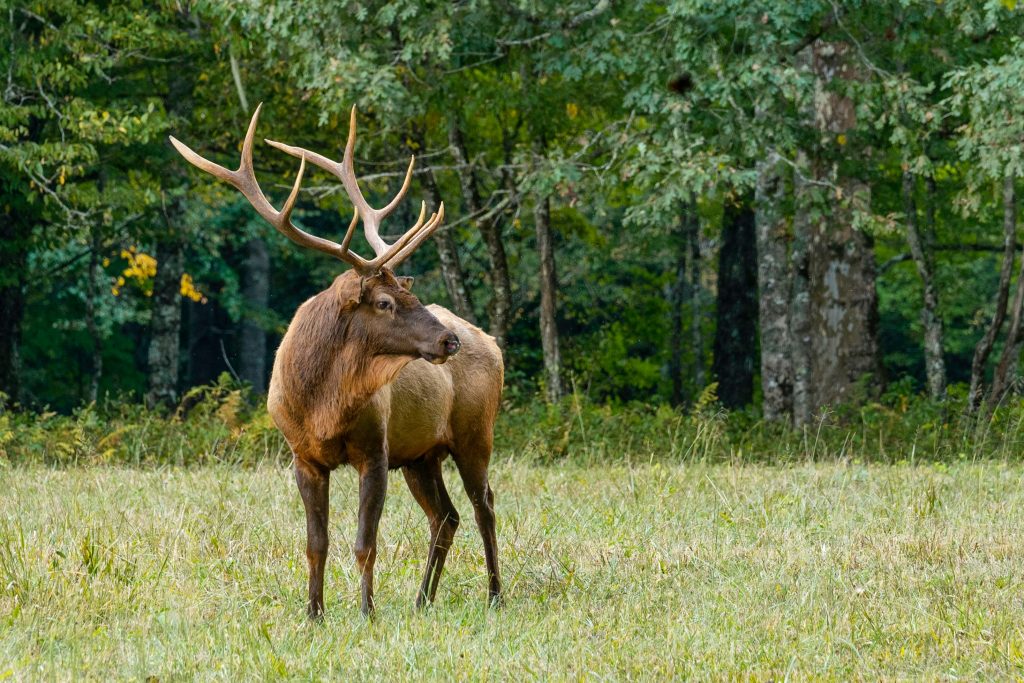
Drive Highway 285 across South Park around dusk this time of year and there’s a good chance you’ll see elk out in the open. Down in Salida and Buena Vista, mule deer cut through yards and neighborhoods like they own the place.
As snow builds in the Sawatch and Mosquito Ranges, deer and elk start moving toward lower ground. That puts more of them closer to your yard, and your trees, right as the season shifts.
What Does Deer and Elk Damage to Trees Look Like?
Bucks and bulls rub their antlers on trees in fall, first to strip the velvet off new antlers and later during the rut. The rubbing tears bark and snaps branches.
Look for strips of shredded bark on the lower trunk, a trunk rubbed raw on one side, and branches that look snapped or broken off. Browsing looks different. Deer have no upper front teeth, so twigs and stems end up rough and shredded instead of cleanly cut.
Many homeowners don’t notice any of this until spring. By then the winter browsing is finished and the damage is done.
Which Trees Are Most at Risk?
Young trees, recently planted trees, and thin-barked trees take the worst of it. Aspens are a good example. Their bark is thin and alive, and elk and deer will strip and chew it. A wound like that gives disease an easy way in.
Elk often do more damage than deer. They’re bigger, they reach higher, and they’ll strip bark from larger trees.
How Do You Protect Trees From Deer and Elk?
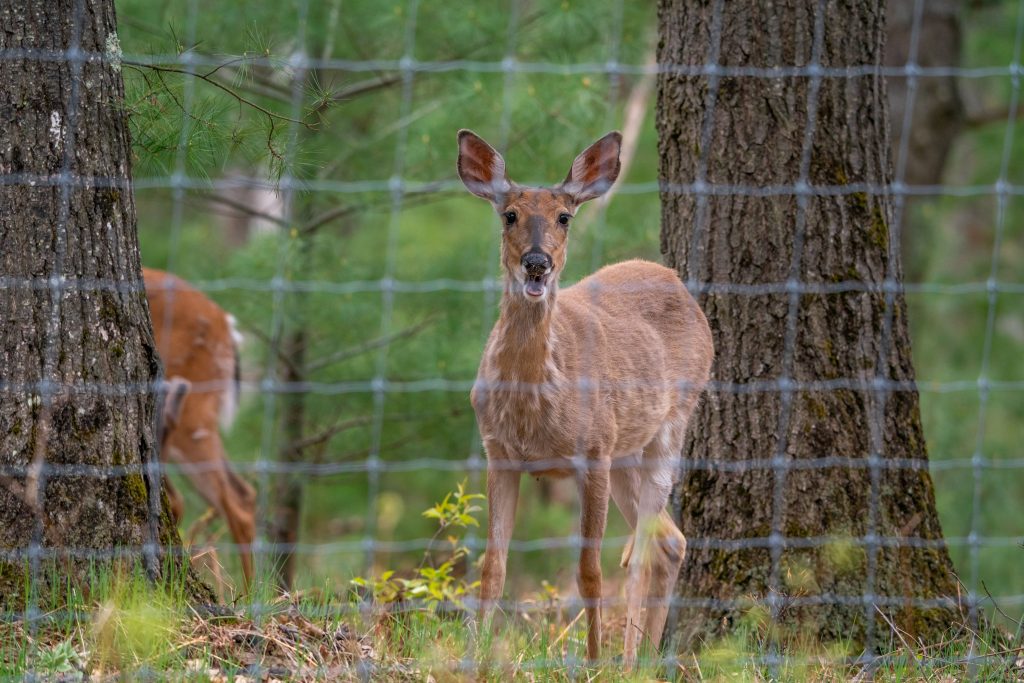
Fencing is the only sure thing. No tree is truly deer-proof, and nothing else is guaranteed.
For individual young trees, a sturdy wire cage set away from the trunk is the most reliable option. Make it tall enough that an animal can’t reach over it, and check it every year so it doesn’t squeeze the trunk as the tree grows.
Soft wraps, netting, and plastic tubes help against nibbling on small trees, but they often won’t stop a buck or bull that’s rubbing. Repellents may help with browsing, but they’re temporary. Skip home remedies like hanging bags of hair. They don’t hold up.
It’s important to remember to not to feed deer or elk, as tempting as it may be in the cold weather. It’s illegal in Colorado, and it tends to keep them hanging around your property.
If you have young trees, now is the time to protect them. Elk rut runs through mid-October, deer rut later in the fall, and winter browsing follows after that. Protection that goes up now covers all three.
Will a Tree Recover From Bark Damage?
Often, yes. A tree typically may be able to handle damage that covers less than a quarter of the way around the trunk. Trim off loose, shredded bark so what’s left is sound and tight to the wood, then leave the wound open. Don’t paint or seal it. Sealants can do more harm than good.
Damage that goes more than halfway around is serious. If the bark is gone all the way around, that’s called girdling. It means the tree can’t move water and nutrients past the wound.
Call an arborist right away if you see girdling. Somewhere in between a full ring around the tree, expect some stress and still have it looked at.
Does Elevation Change What You Should Watch For?
Yes. In Salida and Buena Vista, the problem is usually mule deer working through neighborhoods, and young landscape trees are the target. Around Leadville, Alma, and Fairplay, elk are more likely to be part of the picture. Deep snow covers other food, so browsing on shrubs and trees becomes more frequent.
Local Tree Care You Can Trust
At Bristlecone Tree Care, we work with homeowners throughout Salida, Buena Vista, Leadville, Fairplay, and surrounding communities in Chaffee, Lake, and Park Counties. Deer and elk move through this whole region, and what they do to a yard depends a lot on where it’s located.
Schedule a Tree Assessment
If you’ve found damage or want to protect young trees before winter, call or text Dave directly at 970-389-3968. We’re happy to take a look.
Frequently Asked Questions About Deer and Elk Damage to Trees
Q. How do I stop deer and elk from rubbing my trees?
A. Fencing is the only sure method. For individual trees, a sturdy wire cage set away from the trunk is the most reliable option. Wraps and repellents often won’t stop rubbing.
Q. Will a tree die from deer or elk bark damage?
A. Often not. Damage covering less than a quarter of the way around the trunk usually heals. Damage that goes all the way around, called girdling, is serious and needs an arborist right away.
Q. Should I paint or seal a tree wound?
A. No. Trim loose bark and leave the wound open so the tree can seal it naturally.
Q. When do deer and elk rub trees?
A. Mostly in fall. Elk rut runs from mid-September into mid-October, and deer rut later in the fall. Winter browsing follows.
Q. Do you serve homeowners at higher elevations like Leadville and Alma?
A. Yes. Bristlecone Tree Care serves homeowners throughout Chaffee, Lake, and Park Counties, from Salida up to Leadville and Alma.


No Comments
Sorry, the comment form is closed at this time.