
Summer Emergency Tree Situations You Shouldn’t Ignore
A broken branch doesn’t always mean you need an emergency tree service. But sometimes waiting makes a dangerous situation worse.
If you notice a large limb hanging over your roof, a tree that has suddenly shifted, exposed roots, or a tree resting against a structure, the first question is: Is this something that needs immediate attention?
In Salida, Leadville, and Fairplay, that answer depends on the size of the damage, where the tree or branch is located, and whether it poses an immediate risk to people or property.
Here’s what to look for—and when it’s time to call an expert.
What tree damage shouldn’t wait?
There are several warning signs that mean you should take a closer look and consider calling an arborist promptly.
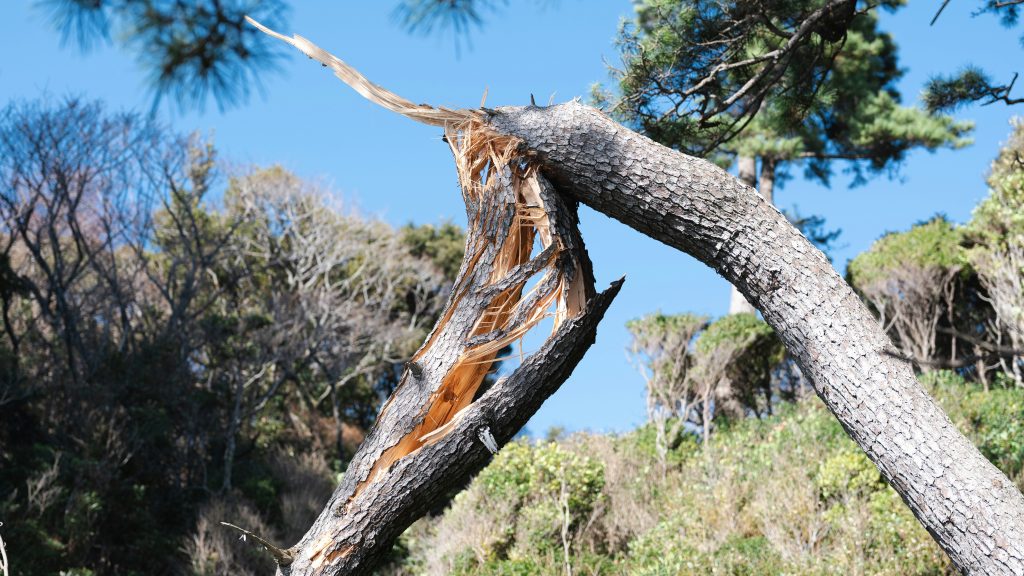
Large Cracked or Hanging Limbs
A large branch that has cracked but is still attached to the tree can be dangerous.
The branch may be supported by only part of its original structure and could fall unexpectedly, especially during another period of wind. Stay away from the area beneath the branch and avoid trying to cut or remove it yourself.
A Tree That Has Suddenly Leaned
Trees don’t necessarily need to be perfectly straight to be healthy. A gradual lean that has been present for years isn’t automatically an emergency.
A new or sudden lean, however, can indicate that something has changed around the tree’s root system or structure. Look at the ground around the base. If you notice raised soil, exposed roots, cracks in the ground, or soil that appears to have shifted, the tree should be evaluated.
Roots Are Lifted or the Ground Has Moved
A tree’s root system provides much of its stability. After heavy wind or saturated conditions, you may notice soil lifting on one side of the tree or roots becoming exposed. This can indicate that the tree has experienced movement below ground.
Don’t assume a tree will simply settle back into place.
A tree with significant root disturbance should be evaluated before anyone works underneath or around it.
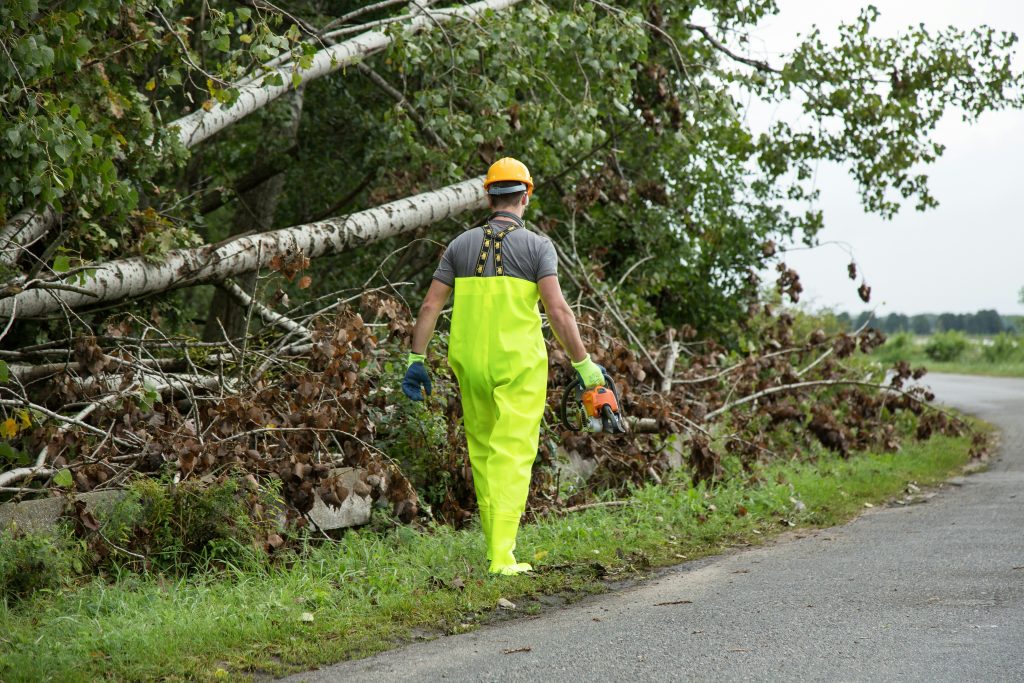
A Tree or Large Limb Is on Your Home
If a tree or large branch has landed on your house, garage, vehicle, or another structure, treat the situation seriously. Don’t climb on the tree or attempt to remove large sections yourself.
There may be additional broken limbs overhead or structural instability that isn’t immediately visible.
If the damage involves your home, you may also need to contact your insurance company before cleanup begins.
What If a Tree Is Touching a Power Line?
This is one situation where homeowners should not approach the tree.
A fallen tree or branch touching a power line can be extremely dangerous, even if the line doesn’t appear to be active. Keep people and pets away from the area and contact your electric utility. Don’t attempt to cut the branch, move the tree, or pull anything away from the line yourself.
Does Every Broken Branch Require Emergency Tree Service?
No. A broken branch that has fallen directly into the yard usually isn’t an emergency. The concern is when the damage creates a risk to people, structures, vehicles, utility lines, or the tree itself.
That’s why it’s useful to look at the size, location, and stability of the damaged part of the tree rather than assuming every storm-damaged tree needs immediate removal.
Sometimes the appropriate solution is removing one damaged branch. Sometimes a larger section of the tree needs to be addressed. And in some cases, the tree itself may need to be removed. A professional assessment helps determine which situation you’re dealing with.
The Varying Elevations of Central Colorado Makes Tree Problems Different From Property to Property
Local conditions matter when evaluating storm damage.
A property along the Arkansas River near Salida or Buena Vista may have different soil and wind exposure than a home farther up in the mountains. Properties around Fairplay can range from protected neighborhoods to open, windy areas where trees experience much greater exposure.
Higher-elevation communities such as Leadville and Alma also have different growing conditions and tree species than many properties around the valley. That means there isn’t always a single answer for what a damaged tree needs.
The tree, its location, the surrounding soil, and the type of damage all matter.
When Should You Call an Arborist Immediately?
Call for professional help promptly if you notice:
- A large branch cracked but still attached
- A tree has suddenly shifted or started leaning
- Roots have lifted or the soil has moved around the base
- A large tree or limb has fallen onto a structure
- Significant branches are hanging over areas where people or vehicles regularly pass
- A tree has sustained major structural damage
If power lines are involved, stay away and contact the utility company rather than approaching the tree yourself.
When in doubt, it’s better to have a dangerous situation evaluated than to take a chance.
Local Tree Care You Can Trust
At Bristlecone Tree Care, we work with homeowners throughout Salida, Buena Vista, Leadville, Fairplay, and surrounding communities in Chaffee, Lake, and Park Counties.
We understand that mountain properties experience very different conditions depending on elevation, exposure, soil, and weather. Our goal is to help homeowners understand what they’re dealing with and determine the safest, most practical next step.
Schedule an Assessment
If a storm has left you with a damaged tree or you’re concerned about a potential hazard, call or text Dave directly at 970-389-3968.
We’re happy to take a look and help you determine what needs attention.
Frequently Asked Questions About Emergency Tree Situations
How do I know if my tree is dangerous?
Warning signs include sudden leaning, major cracks, large hanging branches, exposed or lifted roots, significant soil movement, or a tree that has fallen onto a structure. A professional assessment will help determine the level of risk.
Is a cracked tree branch an emergency?
Not every cracked branch requires emergency service. However, large branches that are still attached, hanging over structures, or located where people or vehicles pass should be evaluated promptly.
What should I do if a tree falls on my house?
Keep people away from the damaged area and avoid climbing on or cutting the tree yourself. If there is structural damage, contact the appropriate emergency services or your insurance company as needed and arrange for professional tree assessment and removal.
What should I do if a tree is touching a power line?
Stay away from the tree and keep others away from the area. Contact your electric utility. Never attempt to cut, move, or remove a tree or branch that is touching a power line.
Does a leaning tree always need to be removed?
No. Some trees have naturally leaned for many years without being hazardous. A sudden change in lean, especially when accompanied by lifted roots or disturbed soil, is more concerning and should be evaluated.
Do you provide emergency tree service in Central Colorado?
Bristlecone Tree Care serves homeowners throughout Salida, Buena Vista, Leadville, Fairplay, and surrounding areas in Chaffee, Lake, and Park Counties.


No Comments
Sorry, the comment form is closed at this time.