Why Are My Tree Leaves Turning Brown in Summer?
By August, many homeowners in Central Colorado start noticing changes in their trees.
Around Salida you may notice brown leaves or pine needles appearing as the surrounding hillsides are already looking dry and golden. In Leadville, an aspen that looked healthy earlier in the summer may have brown leaves around the edges. A cottonwood in Buena Vista may be dropping leaves sooner than expected. Or an evergreen in Fairplay may be developing brown needles.
It’s natural to wonder why the leaves are turning brown in the middle of the summer.
There isn’t always one simple answer. Brown leaves or needles can be related to summer heat and drought stress, watering problems, root damage, insects, disease, or other environmental conditions. The way the browning develops can provide useful clues about what the tree may be experiencing.
The good news is that brown foliage doesn’t automatically mean your tree is dying.
What Causes Tree Leaves to Turn Brown in Summer?
One common cause is leaf scorch, which occurs when a tree can’t take up enough water to meet its needs during hot, dry weather.
You may notice dry, brown areas along the edges of leaves or between the veins. In more severe cases, entire leaves turn brown and drop early. Aspens can be susceptible to leaf scorch, especially during hot, dry conditions. Water isn’t always the only factor. Root damage, compacted soil, overwatering, fertilizer problems, heat, and other stresses can also contribute to browning.
That’s why it’s important not to assume that every brown leaf means the tree simply needs more water.
What If My Pine Tree Needles Are Turning Brown?
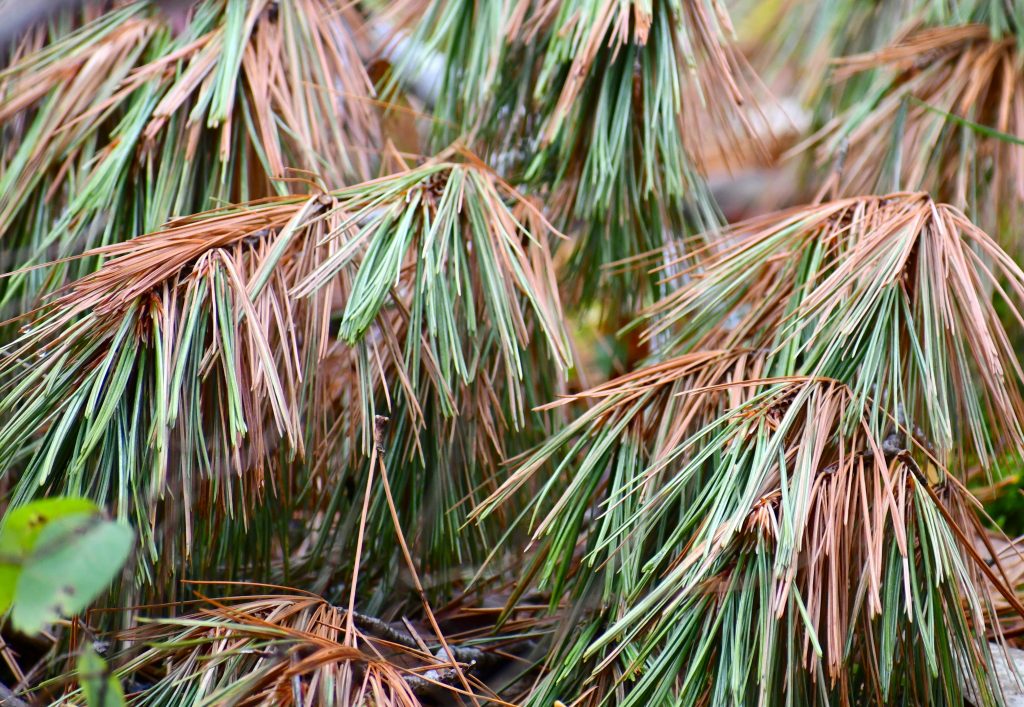
Evergreen trees can show similar signs of stress, but you’ll be looking at needles rather than leaves.
Summer drought stress can cause needle tips and older needles to brown, and more extensive stress leads to thinning foliage and branch dieback. Older interior needles also brown as part of natural needle loss.
Piñons are a familiar sight around the lower elevations of the Arkansas Valley and on the drier, more exposed properties around Buena Vista and Salida. When several piñons on the same property begin showing brown needles, it’s worth taking a closer look at the pattern rather than assuming it’s simply drought or insects.
Piñon trees can experience several different problems that cause yellowing, browning, thinning crowns, or branch dieback, including environmental stress, diseases, and insects.
The important thing is not to jump to a diagnosis based on color alone.
Instead, look at the entire tree.
What Should You Look For?
If you notice browning, take a few minutes to look closely at the tree.
Ask yourself:
- Is the browning on the edges of leaves or throughout the entire leaf?
- Is it affecting one branch, one side of the tree, or the whole canopy?
- Are newer leaves affected, or mostly older growth?
- For evergreens, are older interior needles browning?
- Are there dead or dying branches?
- Do you see unusual insects, holes, pitch, spots, or other signs?
- Is the soil unusually dry?
- Have other trees nearby started showing similar symptoms?
- Did the change happen gradually or fairly suddenly?
These observations won’t necessarily tell you exactly what’s wrong, but they can help an arborist understand what you’re seeing.
Central Colorado Trees Don’t All Experience the Same Conditions
One thing that’s easy to forget around here is how much conditions vary from one property to the next.
A tree growing beside the Arkansas River doesn’t experience the same conditions as one on an exposed hillside in Fairplay. Even two trees in the same neighborhood can receive different amounts of sun, wind, and moisture depending on where they’re planted.
A tree tucked close to a home may be protected from afternoon winds, while one out in the open takes the full force of them. Soil can also vary considerably from one part of a property to another.
That’s one reason a symptom that looks similar from a distance can have a different cause.
Elevation, soil, exposure, available moisture, and tree species all matter. And don’t be surprised if two trees sitting only a few yards apart look completely different. Differences in soil, water availability, sun exposure, and even the tree’s position on the property can affect how it responds to a dry summer.
When Should You Call an Arborist?
If browning is widespread or getting worse, is accompanied by significant branch dieback, or is affecting a tree you’re concerned about, it’s worth having it evaluated. The same is true if you simply can’t figure out what you’re seeing.
Sometimes a tree is responding to environmental stress and will recover with proper care. Other times, browning is a sign of an underlying problem that needs attention.
You don’t have to figure out the diagnosis yourself.
An arborist will look at the tree, its growing conditions, and the pattern of symptoms and help determine what makes sense to do next.
Local Tree Care You Can Trust
At Bristlecone Tree Care, we work with homeowners throughout Salida, Buena Vista, Leadville, Fairplay, and surrounding communities in Chaffee, Lake, and Park Counties.
We understand that mountain trees can respond differently depending on elevation, weather, soil, and exposure. Our goal is to help homeowners understand what’s happening with their trees and make informed decisions about what to do next.
Schedule a Tree Assessment
If your tree is turning brown and you’re not sure why, call or text Dave at 970-389-3968.
We’re happy to take a look and help you understand what you’re seeing.
Frequently Asked Questions About Brown Tree Leaves and Needles
What causes summer browning of tree leaves?
Summer browning can have several causes, including heat stress, drought, leaf scorch, root problems, insects, disease, and watering issues. The pattern of browning can provide clues about what may be happening.
Why are my pine needles turning brown in summer?
Summer drought stress can cause browning in evergreen needles, including piñons, but insects, diseases, root problems, and other stresses can also cause similar symptoms. The location and pattern of the browning are important to consider.
Does brown foliage mean my tree is dying?
Not necessarily. Trees can develop brown leaves or needles from temporary environmental stress, natural needle loss, or other conditions. More widespread or progressive browning and branch dieback are reasons to have the tree evaluated.
Why are my aspen leaves turning brown?
Aspens can develop leaf scorch during hot, dry summer conditions. Premature leaf drop can also occur when trees are experiencing drought, excessive heat, root damage, or other stress.
Should I call an arborist if my tree is turning brown?
If the browning is widespread, worsening, accompanied by dead branches or other unusual symptoms, or you’re simply unsure what’s causing it, a professional assessment can help identify the appropriate next step.


No Comments
Sorry, the comment form is closed at this time.